PPC / Google Ads Management for businesses that need clearer growth.
Use ppc to fix broad keywords, vague landing pages, poor tracking, and budget leaking into low-intent clicks and move visitors toward cost per qualified lead.
Introduction
PPC / Google Ads Management should do more than make a company look current. It should explain the offer, answer the questions a serious buyer is already asking, and make the next step feel easy. This page is written for businesses comparing ppc / google ads management, so the copy, structure, proof, and calls to action all point toward broad keywords, vague landing pages, poor tracking, and budget leaking into low-intent clicks, cost per qualified lead, and a clean path from first visit to qualified inquiry. A visitor should not need to decode what the business does or wonder whether the company can help. The page should make that clear in plain English.
Visionary Pixel approaches PPC / Google Ads Management as both a website development and conversion problem. That means the design has to look polished, the content has to sound specific, the code has to load reliably, and the SEO structure has to help search engines understand the page. The goal is not to repeat the same keyword until it feels forced. The goal is to create a useful page that feels natural to read, demonstrates experience, and gives a qualified visitor enough confidence to start a conversation.
Why This Service Matters
PPC / Google Ads Management matters because a website is often the first serious proof a prospect sees. Referrals, ads, social posts, and search results all send people back to the site for confirmation. If the page is thin, slow, confusing, or generic, the business loses trust before a conversation starts. That is especially true for businesses comparing ppc / google ads management, where visitors compare several companies quickly and rarely announce why they left.
A strong page creates order. It names the service, explains who it is for, shows what makes the company credible, and removes small doubts before they become reasons to leave. For local markets, the page should be honest about service areas, business presence, and what customers can expect after they reach out. Search engines also need that order. Clear headings, internal links, schema markup, descriptive images, and specific paragraphs help Google understand the topic without relying on keyword stuffing.
Benefits of Website Development
Good website development gives the business a stronger sales asset. It can improve first impressions, reduce repetitive sales questions, support local SEO, make campaigns convert better, and give the team a stable place to publish new proof. The benefit is not only visual. It is operational. A better site saves time by explaining common questions before a call and by routing the right people toward the right action.
For PPC / Google Ads Management, the most useful benefits are clarity, speed, trust, and measurement. Clarity helps visitors understand the offer. Speed keeps mobile users from bouncing. Trust comes from proof, reviews, case studies, transparent details, and a professional presentation. Measurement comes from analytics events, form tracking, phone links, and a structure that lets the business see which pages create interest.
- Clear positioning for businesses comparing ppc / google ads management
- Responsive pages that work on phones, tablets, and desktops
- Search-friendly headings, metadata, schema, and internal links
- Stronger calls to action for calls, quotes, bookings, demos, or consultations
- A scalable content structure for future services, resources, industries, and locations
| Decision | DIY or Generic Template | Visionary Pixel Approach |
|---|---|---|
| Design | Starts from a prebuilt layout | Starts from the offer, proof, and customer questions |
| SEO | Basic titles and scattered pages | Structured headings, metadata, schema, and internal links |
| Content | Often vague or copied from competitors | Written around businesses comparing ppc / google ads management and real buying concerns |
| Speed | Can become slow from themes and plugins | Built with image, script, font, and mobile performance in mind |
| Support | You troubleshoot issues alone | Ongoing maintenance, edits, hosting, and launch support are available |
Our Website Development Services
Visionary Pixel can support PPC / Google Ads Management with a focused set of website development services. These services can stand alone or work together as one build. The right mix depends on the business model, platform, budget, timeline, and how much content already exists.
Custom Website Design
Custom website design creates the visual and content structure for a page that does not feel interchangeable. For businesses comparing ppc / google ads management, that means the layout should highlight the right proof, explain the offer in customer language, and make the primary action obvious. The design system also covers spacing, typography, buttons, cards, forms, and reusable sections so future pages stay consistent.
WordPress Development
WordPress development is useful when the team needs a familiar editor and a flexible content system. The work should avoid bloated themes and unnecessary plugins. A clean WordPress build can support PPC / Google Ads Management with reusable blocks, fast-loading templates, clear page fields, backups, security basics, and a publishing workflow that does not break the design every time a page is edited.
eCommerce Development
eCommerce development focuses on product discovery, trust, checkout confidence, and operational accuracy. For stores, PPC / Google Ads Management may involve product page structure, collection pages, payment setup, shipping context, reviews, comparison details, and analytics. The goal is to help shoppers understand what they are buying, why it is credible, and what happens after they order.
Website Redesign
Website redesign is the right path when the current site has value but no longer supports the business. A careful redesign keeps useful pages, improves weak sections, redirects old URLs, updates the design system, and checks forms before launch. For businesses comparing ppc / google ads management, redesign work often fixes unclear messaging, dated visuals, poor mobile flow, slow pages, and missing proof.
Website Maintenance
Website maintenance keeps the site healthy after launch. That includes updates, backups, uptime checks, form testing, content edits, security review, analytics checks, and small improvements as the business learns. Maintenance matters because a website that looks good on launch day can quietly lose value if forms break, plugins expire, images grow too heavy, or service information becomes outdated.
Why Choose Us
Visionary Pixel is founder-led, which means the person planning the page is close to the design, development, content, and launch details. That matters because PPC / Google Ads Management has too many moving parts to survive a vague handoff. Messaging, layout, SEO, speed, and conversion all need to support the same goal. A small, direct team keeps those decisions connected.
The work is also intentionally honest. We do not claim guaranteed rankings, invented traffic numbers, or fake offices in towns where the business does not operate. Instead, each page is built around useful content, accurate positioning, clean technical implementation, and practical next steps. That is better for users and safer for long-term search visibility.
Internal link suggestions: connect this page to <a href="/services/web-design">Web Design</a>, <a href="/services/website-development">Website Development</a>, <a href="/services/seo-services">SEO Services</a>, <a href="/pricing">Pricing</a>, and the most relevant industry or location page. These links help visitors compare options and help search engines understand the site architecture.
Site-wide link map
For stronger topical authority, PPC / Google Ads Management should connect to the broader service, industry, location, pricing, portfolio, and resource pages below.
Our Development Process (Step-by-Step)
A reliable process keeps the project from turning into a collection of opinions. The steps below give PPC / Google Ads Management a clear path from idea to launch. They also make review easier because every stage has a purpose.
Discovery
Clarify goals, audience, offer, proof, and conversion action.
Map
Plan pages, headings, FAQs, internal links, and image needs.
Design
Create the visual direction and section hierarchy before code.
Build
Develop responsive pages, forms, schema, analytics, and speed basics.
Launch
QA links, mobile, forms, redirects, metadata, and sitemap entries.
- Discovery: define the audience, offer, service area, goals, competitors, and conversion action.
- Content map: outline the H1, H2s, FAQs, proof sections, internal links, image needs, and metadata.
- Wireframe: plan the order of sections before visual design starts.
- Design: create a polished layout that matches the brand and makes the next step obvious.
- Development: build responsive templates with semantic HTML, fast assets, forms, and analytics.
- SEO setup: add title tags, meta descriptions, schema, canonical URLs, internal links, and sitemap entries.
- Quality assurance: test mobile layout, forms, links, accessibility basics, speed, and browser behavior.
- Launch and review: publish the page, verify indexing signals, and monitor early performance.
Features Included
Every PPC / Google Ads Management page should include more than attractive sections. It needs practical features that support trust, usability, search, and conversion. The exact scope changes by project, but the foundation should be consistent.
- One clear H1 using the primary topic of the page
- Logical H2 and H3 hierarchy for skimming and featured-snippet opportunities
- Short paragraphs written at an accessible reading level
- Calls to action for quotes, calls, bookings, demos, or consultations
- FAQ content with direct answers and FAQPage schema
- Service schema, LocalBusiness schema, and BreadcrumbList schema where appropriate
- Suggested image placement with descriptive alt text
- Internal links to related services, industries, resources, pricing, and proof
- Mobile-first spacing, tap targets, and readable typography
- Analytics-friendly buttons, forms, and phone links
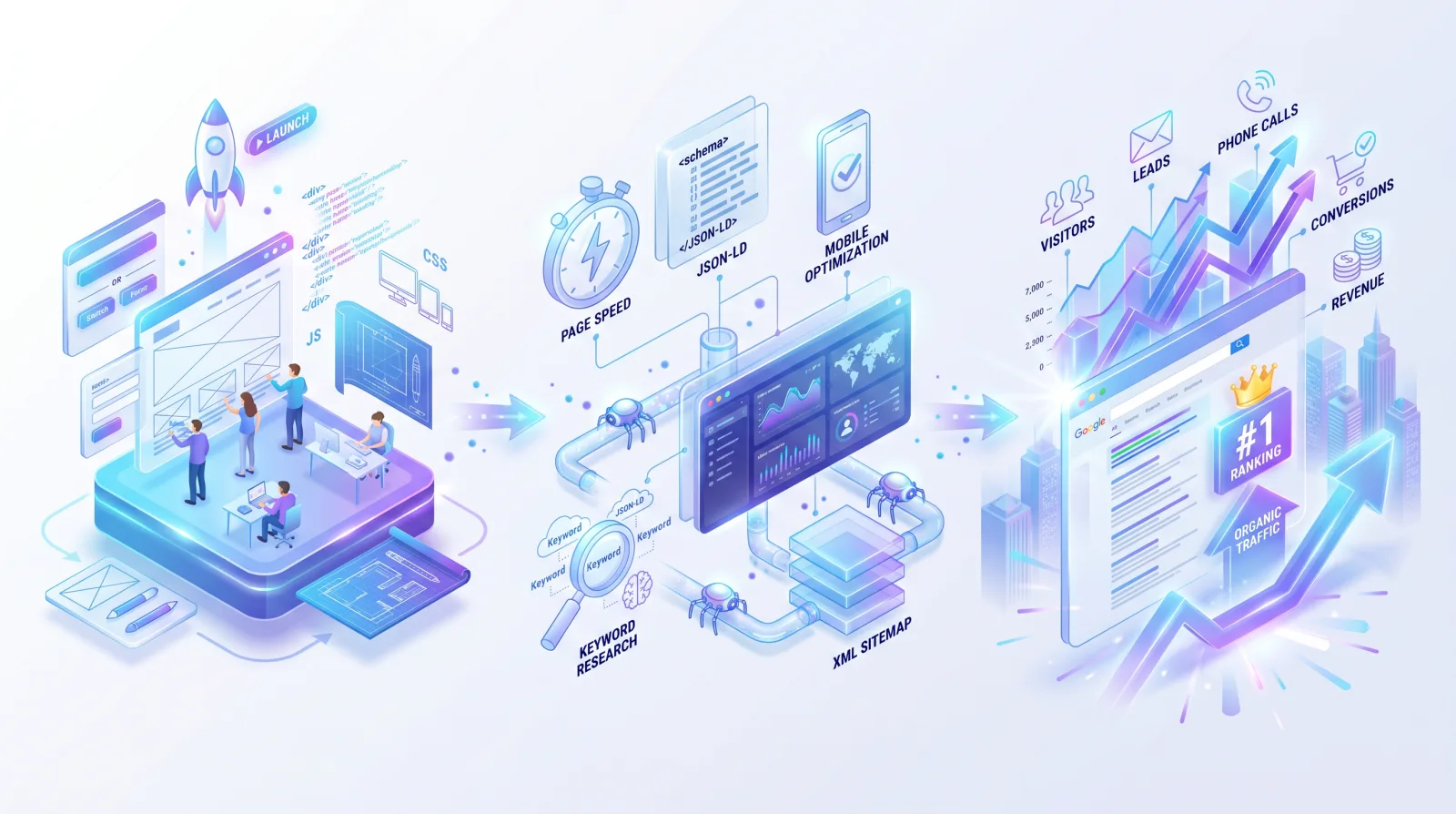
Image guidance: this page includes a descriptive SEO visual near the planning and proof sections, with page-specific alt text tied to PPC / Google Ads Management. On client builds, we pair visuals with real screenshots, project photos, team photos, location photos, or before-and-after proof when those assets are available. The strongest alt text explains what the image shows, such as "PPC / Google Ads Management example website page by Visionary Pixel for businesses comparing ppc / google ads management," instead of repeating keywords without context.
Industries We Serve
Visionary Pixel builds websites for companies that need clear service pages and better inquiry paths. service businesses, professional firms, ecommerce brands, nonprofits, and B2B companies need pages that explain real value. The exact language changes by industry because each buyer has different worries. A homeowner comparing remodelers wants project photos. A patient comparing clinics wants trust and clarity. A manufacturer wants capabilities and RFQ details. A nonprofit wants mission, donation, and impact information.
Common industries include contractors, roofers, plumbers, electricians, HVAC companies, remodelers, concrete companies, real estate professionals, law firms, dentists, med spas, clinics, therapists, restaurants, cafes, gyms, salons, auto repair shops, cleaning companies, moving companies, pest control companies, accountants, insurance agencies, financial advisors, nonprofits, churches, schools, manufacturers, and B2B service companies.
Common Problems We Solve
PPC / Google Ads Management is usually needed because something about the current website is holding the business back. Sometimes the problem is obvious, like a dated design or broken form. More often, the issue is a cluster of small problems: weak headlines, missing proof, unclear service pages, slow images, vague calls to action, poor mobile spacing, thin location content, or analytics that do not show where leads come from.
We solve those problems by making the page more specific. The page should explain what the company does, who it serves, where it works, what makes it credible, and what action to take next. It should also support related pages instead of standing alone. That is how a website becomes a connected growth system instead of a stack of disconnected landing pages.
- The homepage does not explain the offer quickly enough.
- Visitors cannot tell which service is the best fit.
- The business has proof, but it is buried or missing.
- Local pages feel copied and do not add real context.
- Forms are too long, hidden, or not tested.
- The site looks fine on desktop but weak on mobile.
- SEO pages exist, but they are isolated from the rest of the site.
Case Study or Success Story
What the old experience usually lacks
- Too few service details
- Weak mobile quote path
- Project proof hard to scan
- Little SEO structure beyond a homepage
What the new page system adds
- Dedicated service sections
- Clear estimate or contact path
- Project image placement
- Indexable pages, schema, FAQs, and internal links
EWJF Tiles
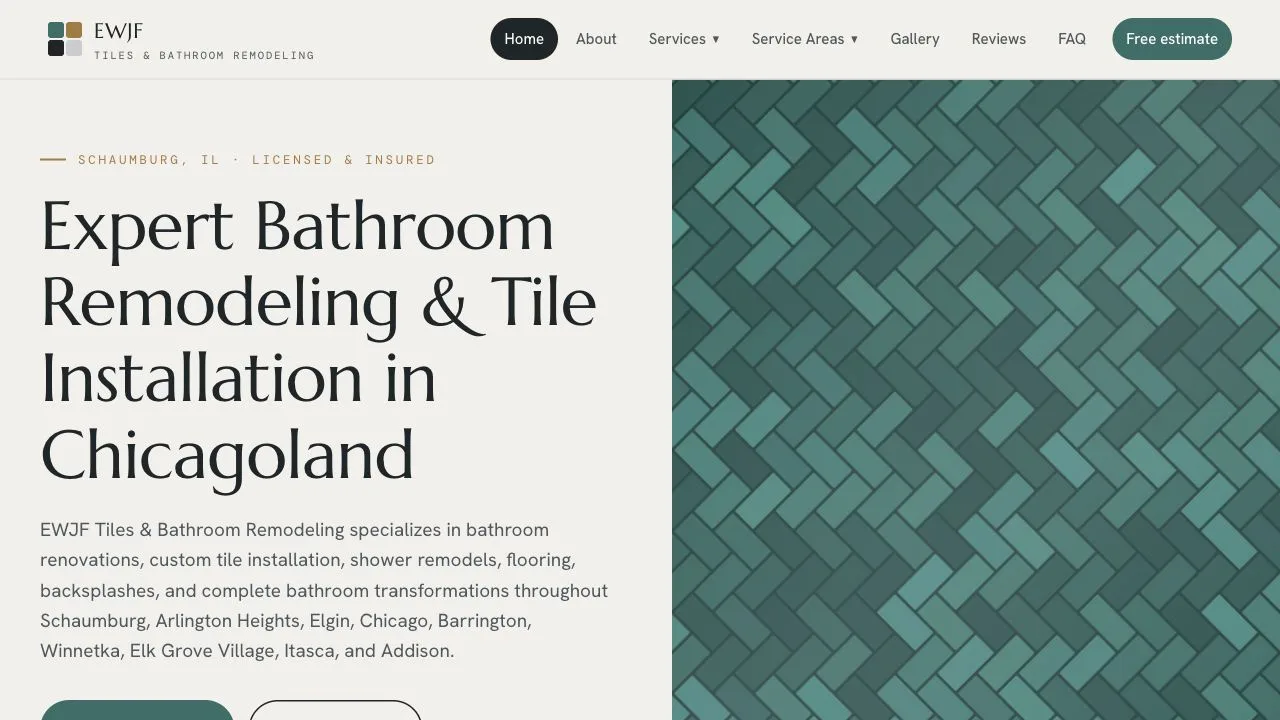
The strongest proof is visible work, not inflated claims. Review the live case study and inspect how the page explains services, proof, and next steps.
Metrics note: only verified analytics should be published as performance claims. Until a client approves specific numbers, this page uses observable proof such as live URLs, page structure, mobile layout, forms, screenshots, and indexable content.
EWJF Tiles
The EWJF Tiles project shows how Visionary Pixel turns a business need into a structured website experience. The useful lesson for PPC / Google Ads Management is not that every company needs the same design. It is that every page needs a clear job. The project used focused sections, responsive layout, proof, and direct action paths so visitors could understand the offer without fighting the page.
For your page, the same principle applies: define the customer, show the proof, make the next step visible, and avoid claims that cannot be supported. A case study does not need fake numbers to be useful. It needs context, constraints, decisions, and a visible example of the work.
View the case study ->Testimonials
Testimonials should support the specific decision a visitor is making. For businesses comparing ppc / google ads management, the strongest testimonials mention communication, clarity, trust, project quality, speed, and whether the website made the business easier to understand. Real reviews should be quoted accurately and linked to their source when possible.
Visionary Pixel made the website feel like our business instead of a generic template. The pages are clearer, easier to navigate, and much easier to send to prospects.
The process was direct and organized. We knew what content was needed, why each section existed, and how the final page would support search and leads.
What helped most was the strategy before design. The finished site looks polished, but it also explains our services in a way customers actually understand.
Frequently Asked Questions
Is WordPress good for small businesses?
WordPress is good for small businesses when it is built cleanly, kept updated, and not overloaded with plugins. It works especially well when the business needs editable service pages, blog posts, resources, or local landing pages.
How many pages should a business website have?
A small business website usually needs five to ten strong pages at launch. A larger SEO plan may add service, industry, location, case study, and resource pages after the core message is clear.
Can I rank without Google Ads?
Yes, but organic ranking takes useful content, technical SEO, authority, reviews, links, and time. Google Ads can create faster visibility, while organic pages build longer-term search value.
Should I redesign or build a new website?
Redesign when the current foundation, URLs, and content still have value. Build new when the platform is slow, hard to edit, technically messy, or unable to support the page structure needed for growth.
How long should a PPC / Google Ads Management page be?
The page should be as long as needed to answer the buyer's questions without padding. For competitive service pages, 2,500 to 3,500 useful words can work well when the content is structured, scannable, and specific.
What is PPC / Google Ads Management?
PPC / Google Ads Management is the planning, design, content, development, and optimization work needed to create a website page or system that supports a clear business goal.
How long does PPC / Google Ads Management take?
Most focused website projects take a few weeks once content, feedback, and access are ready. Larger builds with many pages or integrations take longer.
How much does PPC / Google Ads Management cost?
Cost depends on page count, content needs, design complexity, platform, integrations, and support. The quote should explain scope, ownership, and ongoing costs.
Will PPC / Google Ads Management help with SEO?
It can when the page has crawlable structure, useful copy, metadata, schema, internal links, fast loading, and a clear topic focus.
Do we need a custom website or a template?
A template can work for simple needs. A custom approach is stronger when the business needs specific services, proof, local context, tracking, or room to grow.
Can you redesign an existing website?
Yes. A redesign should audit current pages, rankings, analytics, forms, and URLs before changing design or deleting content.
Can you write the page copy?
Yes. Strong copy starts from customer questions, reviews, sales notes, and service details, then turns that material into clear sections and calls to action.
What platform should we use?
The platform should match the business. WordPress fits editable content, Shopify fits ecommerce, and custom builds can be excellent for speed and control.
Do you include mobile design?
Yes. Mobile layout is included because most prospects compare businesses from a phone before they call, book, or request a quote.
What makes a page convert better?
A page converts better when the offer is clear, proof is visible, contact options are easy, and the visitor knows the next step.
Do you add schema markup?
Yes, where it fits the page. Common types include Service, FAQPage, LocalBusiness, BreadcrumbList, Article, and CollectionPage.
Can this page target a local area?
Yes, if the business truly serves that area and the page includes useful local context, service details, proof, FAQs, and honest coverage language.
How do internal links help?
Internal links help users and search engines understand how services, industries, locations, resources, proof, and pricing relate to each other.
Will you guarantee first-page rankings?
No. Rankings depend on competition, authority, content quality, links, reviews, technical health, and time. Honest SEO avoids guaranteed ranking promises.
What should we prepare before starting?
Prepare service details, customer questions, reviews, work examples, brand assets, domain access, analytics access, and any pricing or qualification rules.
Final Call to Action
If this page describes the kind of visibility, clarity, and lead quality you want, send the project details. Visionary Pixel will reply with the strongest practical next step.